Social Media

Social Media

‏إظهار الرسائل ذات التسميات win10. إظهار كافة الرسائل

الأربعاء، 8 يناير 2020

How to Remote Connect to a Windows PC From a Raspberry Pi

[ad_1]


Advertisement


Working hard on your Raspberry Pi but need to access your Windows computer? But wait, it’s at the other end of your house, or even upstairs…

It isn’t convenient to stop and switch to the main PC. Wouldn’t it be great if you could access your PC while staying where you are? Well, you can! Just remote connect to your Windows PC from your Raspberry Pi instead.

Note: If instead you’re looking to remotely control your Raspberry Pi from a PC, you should check our guide to SSH, VNC, and RDP with Raspberry Pi


VNC, SSH and HDMI: Three Options for Viewing Your Raspberry Pi


VNC, SSH and HDMI: Three Options for Viewing Your Raspberry Pi

The Raspberry Pi is a remarkable little computer, but it can be time consuming to set it up and connect it to your monitor.
Read More

.)

How to Remote Connect From Raspbian to Windows

Perhaps you need to check an email, or some other application that you can only access on your PC. Whatever the case, you’ll need to configure a remote connection from your Raspberry Pi.

While straightforward to do, the steps seem to be shrouded in mystery. We’ll clear it up for you. Here’s an overview:

  1. Configure windows to accept remote connections

  2. Find the IP address of your Windows PC

  3. Install Remote Desktop Protocol (RDP) software on Raspbian

  4. Install a remote desktop app on Raspbian

  5. Connect to your PC via your Raspberry Pi

In just five steps you can set up a remote desktop connection from your Raspberry Pi to your PC.

Step 1: Configure Windows for Remote Connections

The first step is to ensure Windows can accept incoming remote connections using the RDP protocol. To ensure this, you’ll need to enable the Remote Assistance setting.

Open Windows Explorer, then find This PC. Right-click, then select Properties; in the System window, find Remote settings.

Here, you’ll find the Allow Remote Assistance connections to this computer checkbox. Click to add a check, then Apply to confirm. Note that there is an Advanced button, which you should also click. Check the Allow this computer to be controlled remotely box, then OK.

Click OK to close the Properties box, then exit the System window.

Step 2: Find the Windows Device IP Address

Next, you need to find the IP address of your Windows computer. You have several options here.

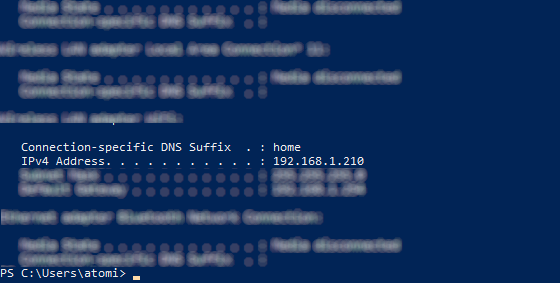
Perhaps the easiest is to ask. Right-click the Start button and select Windows PowerShell. When the blue command line window opens, enter

ipconfig

Check the list for your current connection; Wi-Fi will be listed as a Wireless LAN Adapter, whereas Ethernet will be listed as such.
How to Remote Connect to a Windows PC From a Raspberry Pi muo linux remote windows IP address

If this is too complicated, the alternative is to access your router through your web browser. You’ll need to check the router documentation for how to do this, but once connected it’s possible to see a list of devices connected to your home network.

Look for the hostname of your PC (via the System window that you opened earlier to enable Remote Assistance) and you’ll find the IP address. It will typically be in the format 192.168.0.x or 192.168.1.x.

When you’ve found the IP address, jot it down for later.

Step 3: Install RDP Software on Raspberry Pi

It’s time to turn your attention to your Raspberry Pi. With the little computer booted up (presumably with a keyboard and mouse attached) and connected to your local network, open the Terminal and update Raspbian:

sudo apt update
sudo apt upgrade

Enter these commands in turn, and follow any prompts that are displayed. When done, your Raspbian system will be up-to-date. Once complete, restart the Pi with:

sudo reboot

When the little computer reboots, start a new Terminal session. This time, install xrdp with:

sudo apt install xrdp

Once again, follow the prompts until the software is installed.

Step 4: Find and Install a Remote Desktop App

Several remote desktop tools are available for Linux distributions. These can handle one or many of the various protocols that can be used to remote control another machine.

However, the best option—certainly for the Raspberry Pi—is probably Remmina, which supports RDP, VNC, SPICE, NX, XDMCP, SSH and EXEC.

To install Remmina, return to the Terminal and enter:

sudo apt install remmina

Follow the prompts, and wait for completion. You can find out more about Remmina at remmina.org.

Step 5: Connect to Your PC With Remmina

You’re about ready to start accessing your Windows PC remotely from your Raspberry Pi. To do this, open Remmina via the single Terminal command:

remmina

You might even launch it from the Internet menu.
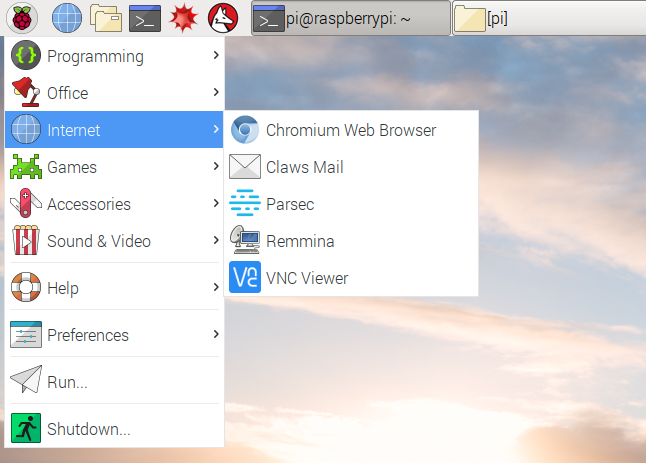
Open the Remmina remote desktop software

A new window will appear, so find the space to enter the IP address, ensuring that RDP is selected as the protocol.
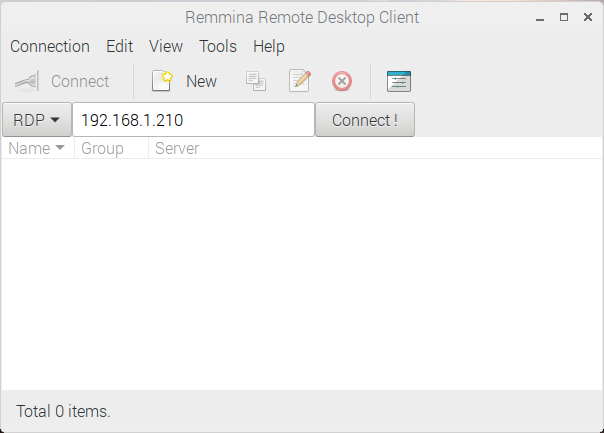
Connect to your Windows PC with Remmina

When you’re ready, click Connect, and wait as the connection is established. A few moments later, you’ll be accessing your Windows desktop from within Raspbian (or whatever your chosen Raspberry Pi operating system


11 Operating Systems That Run on Your Raspberry Pi


11 Operating Systems That Run on Your Raspberry Pi

Whatever your Raspberry Pi project, there's an operating system for it. We help you find the best Raspberry Pi OS for your needs.
Read More

might be).

Tweaks to the connection (including adjusting quality) can be made via the Edit > Preferences window.

Remote Control a Windows PC With Raspberry Pi
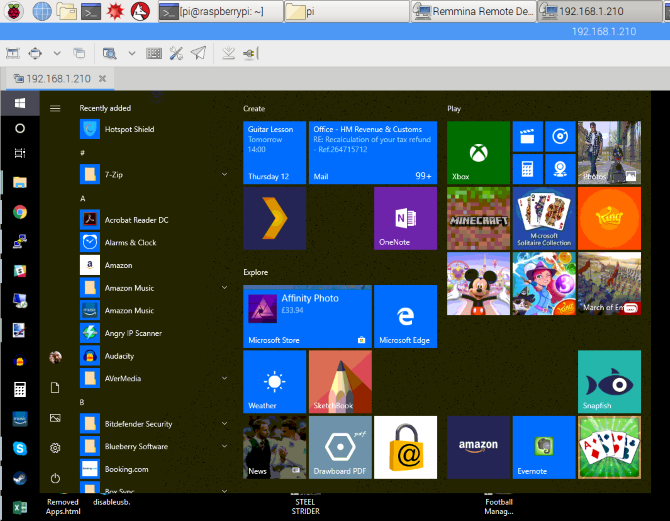
Remote control your Windows PC using Raspbian

With your Windows 10 computer now accessible from your Raspberry Pi, any number of options are available. You might check emails, or access the PowerShell command line remotely. You might need to access game settings if you’re managing a game server on your Raspberry Pi.

Basically, any task that requires your presence in two places can be completed. However, it probably wouldn’t be a good idea to attempt play video games on your PC via your Raspberry Pi in this way. The frame rate will prove a problem. (If you want to do that, try streaming from PC to TV via Raspberry Pi.)

Meanwhile, it’s also possible to remote connect from Windows to other Linux computers


How to Establish Remote Desktop Access to Ubuntu From Windows


How to Establish Remote Desktop Access to Ubuntu From Windows

Want to remote access your Ubuntu home computer from another location? Here's how to remotely access Ubuntu from Windows.
Read More

.


[ad_2]

Source link
Which Should You Use for Your SSD?

[ad_1]


Advertisement


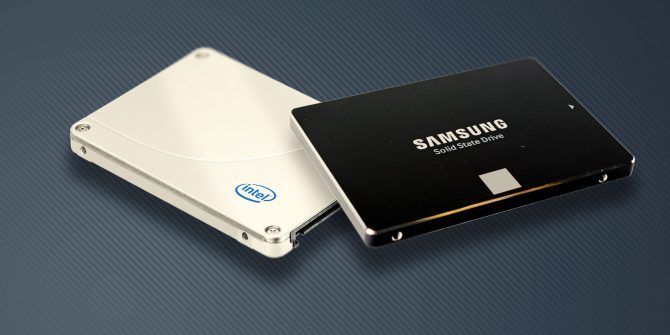
When you connect a drive to Windows, you need to choose between Master Boot Record (MBR) or GUID Partition Table (GPT). These are methods that hold information about how the data is stored on the drive. But how do you know which one to use?

We’re going to look at the differences between MBR and GPT, along with assessing which is the best for your SSD. While GPT is more modern and has more advantages, there are some unique situations where you need MBR.

MBR vs. GPT: Partitions

Simply put, partitions are sections on the drive that store data


How to Manage Hard Drive Partitions and Volumes in Windows 10


How to Manage Hard Drive Partitions and Volumes in Windows 10

Is Windows slow and running out of storage space? Or do you want to re-allocate space? We'll show you how to use Windows 10's partition manager.
Read More

. You always need at least one partition on a drive, or else you can’t save anything. Although you might only have one physical drive, you can use partitions to split it up, and assign a different drive letter to each partition.

MBR only lets you create four primary partitions. However, you can circumvent this limitation by using logical partitions. This means that you can create three primary partitions, plus an extended partition. Inside this extended partition, you can have logical partitions.

The biggest limitation with this is that you cannot use logical partitions as boot volumes, which is a type of partition that holds Windows operating system files. For example, you could have Windows 10 on one partition and Windows 7 on another. For most people this won’t be a problem, unless you want to boot multiple operating systems from the same drive.

GPT doesn’t have the same limitation. You can create up to 128 partitions on a single GPT drive, without needing to use the logical partition workaround. The 128 limit is dictated by Windows (other operating systems allow for more), but it’s unlikely that you’ll ever be in a situation where you reach that number.

In short: MBR can have four primary partitions; GPT can have 128.

MBR vs. GPT: Capacity

Solid state drives are still vastly more expensive when compared against their hard disk drive counterparts. But the price gap is closing over time, and so is the capacity available for consumer SSDs. If you’ve got some cash to spare, you might have a 4TB SSD. The capacity of the drive will dictate your decision of MBR or GPT, as they have different limits.

ssd-101-feat

The technicalities behind it are tricky, but MBR is constrained by the capacity and limited number of its sectors—only 32 bits are available to represent logical sectors. You can find out more on Microsoft’s TechNet blog, but it means that MBR can only use up to 2TB of storage space. Anything larger than that, and the extra disk space is marked as unallocated and unusable.

GPT allows for 64 bits, which means that the storage limitation is 9.4ZB. That’s a zettabyte, which is one sextillion bytes or a trillion gigabytes. In practice, what it really means is that GPT has no real-world limit. You can buy any capacity drive and GPT will be able to use all of the space.

In short: MBR can support up to 2TB; GPT handles up to 9.4ZB.

MBR vs. GPT: Recovery

MBR stores all the partition and boot data in a single place. This means that if anything gets corrupted, you’ll run into a problem. If any data gets corrupted with MBR, chances are you’ll only find out when your system fails to boot. Recovery from MBR


How to Fix the Master Boot Record in Windows 10


How to Fix the Master Boot Record in Windows 10

The Master Boot Record can become corrupt, damaged, or simply disappear. Here are the fixes you can attempt to revive your system.
Read More

is possible, but not always successful.

GPT is far superior in that it stores multiple copies of the boot data across several partitions, at the beginning and end of the table headers. If one partition gets corrupted, it can use the other partitions to recover.

Additionally, GPT has error-detecting code that will assess the partition tables on boot and see if there’s anything wrong with them. If it detects errors, GPT can try to repair itself.

In short: GPT is more resilient to errors.

MBR vs. GPT: Compatibility

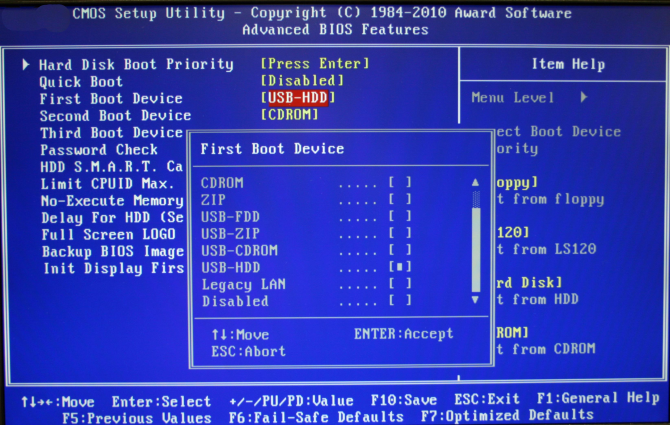
BIOS and UEFI are interfaces that boot your machine


Discover Your BIOS & Learn How to Make the Most of It


Discover Your BIOS & Learn How to Make the Most of It

What the heck is the BIOS, anyway? Is it really that important to know? We think so and fortunately it's pretty easy. Let us introduce you.
Read More

. While they both serve the same purpose, they are different.

BIOS is older (it’s been around since the 80s) and any new system purchased since 2010 will very likely use UEFI.


Computer BIOS
Image Credit: Toniperis/Wikimedia Commons

Your ability to use MBR or GPT will depend on which interface your system supports:

  • 64-bit Windows 10, 8/8.1, 7, and Vista all require a UEFI-based system to boot from a GPT drive.

  • 32-bit Windows 10 and 8/8.1 require a UEFI-based system to boot from a GPT drive.

  • 32-bit Windows 7 and Vista cannot boot from a GPT drive.

  • All mentioned Windows versions can read from and write to a GPT drive.

In short: MBR is good for older operating systems; GPT is more suitable for modern computers.

MBR vs. GPT: Which Is Best?

To cut to the chase, GPT is best. It’s a must-have if your drive is more than 2TB, though that might not be the case with an SSD. Nevertheless, GPT is more corruption-resilient and has better partition management. It’s the newer and more reliable standard.

SSDs work differently than an HDD


How Do Solid-State Drives Work?


How Do Solid-State Drives Work?

In this article, you'll learn exactly what SSDs are, how SSDs actually work and operate, why SSDs are so useful, and the one major downside to SSDs.
Read More

, with one of the main advantages being that they can boot Windows very quickly. While MBR and GPT both serve you well here, you’ll need a UEFI-based system to take advantage of those speeds anyway. As such, GPT makes for the more logical choice based on compatibility.

When should you use MBR, then? Really, only if you want to run old operating systems. The standard user will likely have no desire to do this, especially since SSDs are better suited to current operating systems like Windows 10. Using a SSD on Windows XP, for example, will significantly reduce the drive’s lifespan and performance due to lack of support for a feature called TRIM.

In short: Use GPT.

How to Check If Your Drive Uses MBR or GPT

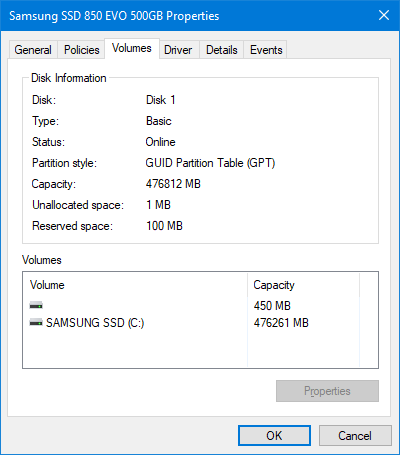
If you want to see whether your existing uses MBR or GPT, it’s easy. Press Windows key + X and click Disk Management.

Find the drive in the bottom pane, right-clickit, and click Properties. Switch to the Volumes tab. Next to Partition style you’ll see either Master Boot Record (MBR) or GUID Partition Table (GPT).

Windows SSD Volume Information

How to Convert From MBR to GPT

If you’ve set your drive to use MBR and want to use GPT, don’t fear. There are tools you can use to switch your partition table without losing any data. Not only are they free, but they’re also really easy to use.

For help on how to do this, check out our guide on how to convert MBR to GPT without data loss


How to Convert MBR to GPT Without Losing Data in Windows


How to Convert MBR to GPT Without Losing Data in Windows

There are two easy ways to convert MBR to GPT without losing a scrap of data. In this tutorial, we cover both methods.
Read More

.


[ad_2]

Source link

5 Best Free Media Players for Windows

[ad_1]


Advertisement


Trying to choose a media player app is like deciding on a web browser: conflicting opinions abound, everyone wants to convert you to “their” app of choice, and it’s easy to drown beneath all the different options out there.

The good news? Worthwhile media player apps always rise to the top as they distinguish themselves, and for the most part, it doesn’t matter which one you choose. The best media player for you is the one you most enjoy using.

Here are the best media players available for Windows 10.

5 Best Media Players for Windows

1. VLC Media Player

VLC Media Player is the most popular media player in the world. If you look on a site like AlternativeTo, you’ll see that VLC ranks up top with over 5,900 Likes with runner-up Media Player Classic coming in at just over 1,000 Likes. VLC is clearly the king. But is it right for you? Maybe, maybe not.

VLC is complex and powerful. “All-in-one solution” describes it best and you can do a lot with it, particularly with all of the advanced settings and options to tweak. The downside? VLC verges on “bloated” status and may not offer the best performance on older, slower hardware.

But if you hate tinkering and just want a media player that’s free and works right out of the box, VLC is the answer. It can stream video URLs in real-time


7 Top Secret Features of the Free VLC Media Player


7 Top Secret Features of the Free VLC Media Player

VLC should be your media player of choice. The cross-platform tool has a bag full of secret features you can use right now.
Read More

, and it can play all standard media types


The VLC Media Player - Does it Really Play Everything?


The VLC Media Player - Does it Really Play Everything?


Read More

, including CDs, DVDs, and most popular video formats like MP4, AVI, and MKV. No need to download, install, and fiddle with codecs.

All in all, we understand why VLC ranks as one of the most popular GitHub projects to date. Considering it’s been in active development since 2001, it’s safe to say that VLC won’t be going anywhere any time soon. For all of this, VLC keeps its spot in our list of best Windows software.

Summary of benefits and notable features:

  • Supports most media codecs out of the box.

  • Supports playback from files, discs, external devices, webcams.

  • Supports online streaming with most mainstream protocols.

  • Hardware acceleration for fast GPU playback.

  • Customize appearance with the VLC Skin Editor.

  • Available on Windows, Mac, Linux, iOS, and Android.

Download: VLC Media Player (Free)

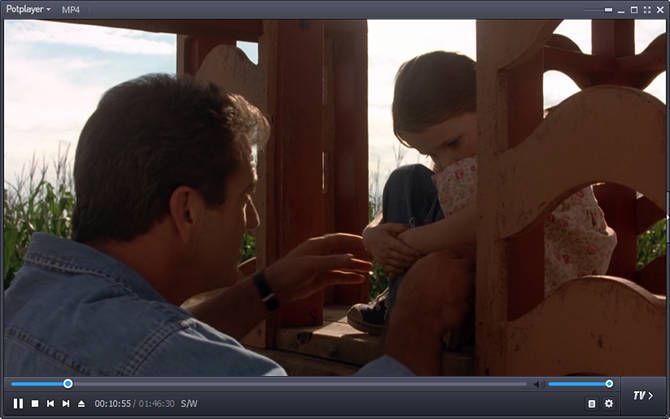
2. PotPlayer

best windows media player potplayer

PotPlayer is a media player app from South Korea. If VLC didn’t have such a strong brand identity, I think PotPlayer would probably stand in its place as king of the free media players.

VLC and PotPlayer share a lot in common, notably that they both serve as easy all-in-one media players for users who just want an out-of-the-box solution. But unlike VLC, which can run into trouble when dealing with larger files or cutting-edge video formats, PotPlayer always works.

And if you want to tweak options and customize to your liking, PotPlayer lets you. In fact, you’ll find it packed with more settings than even VLC, and lots of advanced features like scene previews, bookmarks, clip recording, and more. And best of all, it uses fewer resources than VLC.

Most users probably won’t care, but you should know that PotPlayer is free but proprietary software (i.e. not open source).

Summary of benefits and notable features:

  • Detailed interface that shows a lot without being cluttered.

  • Supports most media codecs out of the box.

  • Supports playback from files, discs, external devices.

  • Supports online streaming with most mainstream protocols.

  • Better handling of large files (Blu-ray) and cutting-edge formats.

  • Available on Windows only.

Download: Daum PotPlayer (Free)

If you like the idea of PotPlayer and other portable apps, take a look at this list of the best portable apps that require no installation


The Best Portable Apps That Require No Installation


The Best Portable Apps That Require No Installation

Portable apps don't need installation. You can run them from even a flash drive. Here are the best portable apps around.
Read More

.

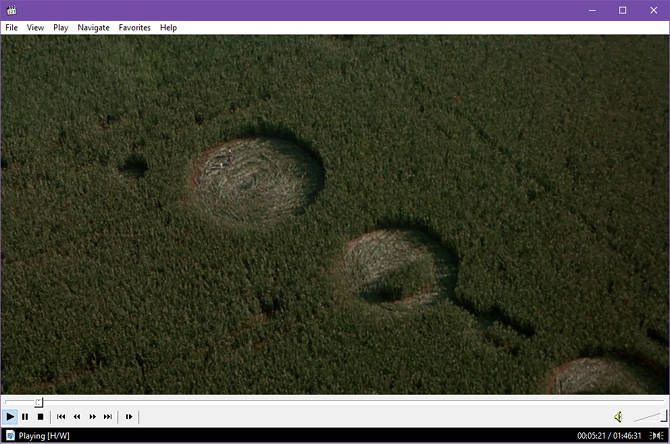
3. Media Player Classic

best windows media player media player classic

Media Player Classic is one of those apps that can stir up nostalgia and send you down memory lane


Remember These? 7 Ancient Windows Programs Still Used Today


Remember These? 7 Ancient Windows Programs Still Used Today

They say technology advances at an exponential rate. But did you know some programs have been around for multiple decades? Join us for a walk down Nostalgia Lane and discover the oldest surviving Windows programs.
Read More

. Released back in 2003, it was the favored alternative to Windows Media Player back during the Windows XP days. It stalled development in 2006, and has since forked into two separate projects: Home Cinema (MPC-HC) and Black Edition (MPC-BE).

Home Cinema is the better choice for everyday users, aiming to remain as lightweight as possible, while supporting the latest standards and video formats. Black Edition is the superpowered version with more features, improvements, and enhancements, but it isn’t as simple to use.

And that’s really the biggest selling point of Media Player Classic: fast performance, low resource usage, small installation size—truly lightweight in every way. It handles most formats without issue, and it supports some advanced features like subtitle downloads, video capture, and integration with Skype.

Media Player Classic is the largest open-source alternative to VLC. If you don’t like how much bloat VLC took on over the past few years, and if you don’t like PotPlayer’s closed-source development, then this is the media player for you.

Note: MPC-HC was discontinued in July 2017, but it still works well and is worth using.

Summary of benefits and notable features:

  • Intuitive and easy-to-use interface.

  • Supports most media codecs out of the box.

  • Supports playback from files, discs, external devices.

  • Extremely lightweight, which means great performance on old machines.

  • Advanced features like subtitle downloads and Skype integration.

  • Available on Windows only.

Download: Media Player Classic (Free)

4. ACG Player

best windows media player acg player

Now that we’ve got the “Big Three” out of the way, I want to highlight this gem of a video player that’s in the Microsoft Store. It’s called ACG Player and it’s tragically underrated. If you thought Media Player Classic was lightweight, this will blow you away.

The first thing you’ll notice is the simplified interface and touch-based controls. Tap the top half for Play/Pause, tap the bottom half to toggle the controls. Swipe left-right to rewind and fast-forward, swipe up-down for volume. Obviously this app was designed for Windows 10 tablets, but keyboard shortcut alternatives exist too.

Advanced features include gesture customizations, multiple window mode, playlist management, online stream playback, and the ability to tweak subtitle appearances and animations. You can also opt for Ax-Lite Video Player, which is a faster version with some of the features cut out.

In short, ACG Player is one of the few apps in the Microsoft Store worth using. It may be barebones, but it’s more than enough.

Summary of benefits and notable features:

  • Simple, gesture-based interface. Great for tablets!

  • Supports most media codecs out of the box.

  • Supports playback from files, discs, external devices.

  • Lightweight and barebones design.

  • Available on Windows only.

Download: ACG Player (Free)

5. MPV

best windows media player mpv

In MPV, we have another free, open-source, cross-platform contender to VLC. This particular project is a fork of both MPlayer and mplayer2, keeping the good bits of those, throwing out the junk, and introducing a whole lot more goodies.

The first thing that stands out is the lack of a traditional user interface. It’s a pure video player with minimal controls overlaid at the bottom—and it’s mostly controlled using mouse movements. Nifty and convenient for touchscreen devices.

Between MPV and VLC, MPV is definitely harder to use if you want to do anything more than just watch stuff. It’s generally more efficient and less demanding resource-wise, but things like fiddling with subtitles or streaming to Chromecast can be a pain.

Overall, it has a bit of a niche appeal, but it’s certainly worth giving a try. What do you have to lose?

Summary of benefits and notable features:

  • Minimal, mouse-based user interface.

  • Supports most media codecs out of the box.

  • Excellent video quality, even when scaling.

  • Lightweight and efficient video playback.

  • Available on Windows, Mac, Linux, Android.

Download: MPV (Free)

Which Media Player App Do You Use on Windows?

Not happy with the current crop of media players? You can still install the classic Windows Media Player. I’m personally settled on VLC Media Player for my main computer and Media Player Classic for my older laptop.

If you have an Android device, you’ll also want a solid media player app for that too, in which case we recommend the excellent MX Player for videos and any of these music player apps for Android


The 15 Best Non-Streaming Android Music Player Apps


The 15 Best Non-Streaming Android Music Player Apps

Want to play local music on your Android device? One of these apps is going to work for you.
Read More

.


[ad_2]

Source link
The Best Windows 10 Dark Themes for Your Eyes

[ad_1]


Advertisement


The benefits of dark screens are easy to understand—less eyestrain, easier-to-read text, and well, they just look cool, don’t they?

After a couple of years of waiting, Windows 10 now offers a native dark theme mode. You’ll also find plenty of third-party dark themes out there; more than enough to suit every taste and style.

Here are some of the best Windows 10 dark themes you can get right now.

How to Change the Windows 10 Theme

Windows personalization options allow you to change the background, lock screen, color, sounds, and the appearance of the cursor. You can change it from the desktop or dig into the Windows 10 settings.

First, either right-click on your desktop and select Personalize > Themes or head to Start > Settings > Personalization > Themes.

You can choose from one of Windows’ built-in themes, or click on Get more themes in Microsoft Store to see more.

1. Windows 10 Dark Theme

With the 2017 Anniversary Update, Microsoft introduced a system-wide Windows 10 dark theme, which previously was only available via a registry hack


How to Unlock the Dark Themes in Windows 10 Apps


How to Unlock the Dark Themes in Windows 10 Apps

Windows 10 lets you change your panes to all sorts of colors, but there's no obvious way to change their background. Here's a tweak that lets you darken some apps.
Read More

.

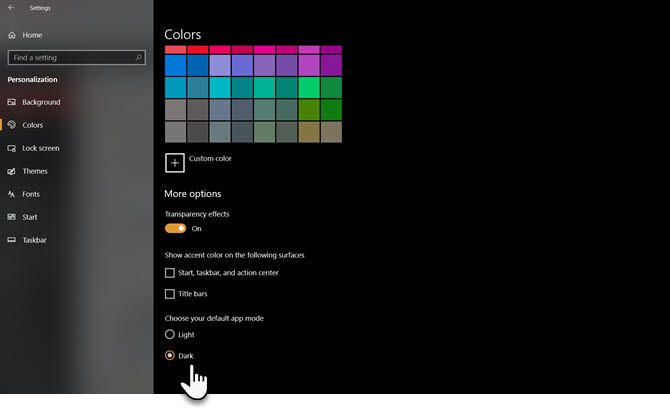
If you’re running the most recent version of Windows 10, head to Settings (Windows key + I) > Personalization > Colors, scroll down and set the default app mode to Dark.

Windows 10 Dark Mode

The theme will change the Windows system apps and Microsoft’s store apps. You will still need to change other third-party apps on a case-by-case basis.

For the record, here’s the old registry hack:

  1. Open Run (either right click on Start > Run or press Windows key + R).

  2. Type RegEdit and press Enter.

  3. Navigate to HKEY_LOCAL_MACHINESOFTWAREMicrosoftWindowsCurrentVersionThemesPersonalize.

  4. Create a new DWORD value called AppsUseLightTheme with a value of 0.

  5. Navigate to HKEY_CURRENT_USERSOFTWAREMicrosoftWindowsCurrentVersionThemesPersonalize.

  6. Again, create a new DWORD value called AppsUseLightTheme with a value of 0.

  7. Restart your computer

Either delete the new registry entries or change their values to 1 to re-enable the light theme.

grey eve theme windows 10

The GreyEve theme is available for download from DeviantArt.

Unlike some of the other themes on this list, it can be installed without using any third-party tools or editing any system files—thus making it great for users who want a hassle-free option.

The developer warns that due to Microsoft’s limited dark theme options he was forced to make it a high contrast theme. You’ll have to check whether or not it suits your needs.

To start using it, download the file and place it in [USERNAME]AppDataLocalMicrosoftWindowsThemes.

penumbra theme windows 10

Before proceeding, be aware that this is a Windows 10-only theme. If you’re reading this article trying to find themes for Windows 7 or 8, this won’t work for you.

It’s been designed to use neutral dark colors, so there won’t be any jarring contrasts or unpleasant colors anywhere on your screen.

The installation process is more complicated than the previous options. Before installing anything, make sure you’ve downloaded these three essential tools:

To get the theme up and running, firstly install the Open Sans font (included in the theme download). Then install UXThemePatcher, and finally, OldNewExplorer.

Next, move the contents of the theme’s Visual Style folder to C:WindowsResourcesThemes. Now is a good time to reboot your computer.

Lastly, select the theme in the Settings app as described earlier.

You can further customize this theme by changing the Taskbar’s color and opacity. The tool is available for download on the theme’s DeviantArt page.

nocturnal theme windows 10

Once again, this is a Windows 10-only theme. Despite sharing the same name as its Windows 8 counterpart, it will not work on older versions of the operating system.

This is arguably the most complex to install. You will need four third-party apps before installing the main theme. They are:

To use the dark theme, install Blank.TFF, then run Blank.REG.

Next, copy the theme folder straight to C:WindowsResourcesThemes. When ready, patch your system using UXThemePatcher.

Finally, navigate back to Settings > Personalization > Themes and choose the theme from the list.

ades theme windows 10

Rather than going for total darkness, Ades Theme uses various tones of gray and introduces some color.

While it still requires a third-party tool, it’s easier than both Nocturnal and Penumbra to install. You will still need UXThemePatcher, but can otherwise download the file and put it straight into C:WindowsResourcesThemes.

To make it look even better, install the developer’s associated icon pack. That’ll let you apply the cool icons you see in the image below.

hover dark aero theme windows 10

Hover Dark Aero uses translucent blacks and grays to create a sleek and visually impressive user interface. If you want to recreate the look you see in the image above, you will need to also download the creator’s associated theme pack. The icon pack is included in the theme’s download files.

There are six different versions of the theme to choose from—each has a slightly different feel.

To make the theme work, you will need to make sure you have installed the aforementioned UXThemePatcher.

hastpy theme windows 10

The last Windows 10 visual style we’re going to recommend is Hastpy.

The developer behind the theme is Cleodesktop. It’s the same person who is responsible for Hover Dark Aero and the similarities are obvious; both use the same icon packs.

Unlike Hover Dark Aero, Hastpy doesn’t have a translucent ribbon. Instead, it deploys a contrasting light grey color. Once again, six different versions of the theme are available.

To install Hastpy on your system, you need to be running UXThemePatcher. Move all the files in the theme download file %windir%/Resources/Themes folder to get up and running.

A Word of Warning Before Applying Windows Themes

Some of these themes make significant changes to your system files. As such, always create a system restore point and backup your work before attempting to install them.

And remember, there are lots of other non-dark Windows 10 skins available. If you would like to like to learn more about using themes on Windows 10, make sure you read our articles about the best Windows themes for every desktop


10 Best Windows 10 Themes for Every Desktop


10 Best Windows 10 Themes for Every Desktop

A new Windows 10 theme gives your computer a fresh look for free. We show you the best Windows themes and how to apply them.
Read More

, and the best white themes for Windows 10


7 White Themes for Windows 10


7 White Themes for Windows 10

Tired of your dark Windows theme? Maybe it's time for a change. In this article, I'm going to introduce you to the seven best white themes for Windows 10.
Read More

.


[ad_2]

Source link

How to Run Old Games and Software on Windows 10

[ad_1]


Advertisement


Microsoft tries to make programs and file formats backward compatible. It doesn’t always work. Sometimes the gap between operating systems is too far and your favorite old Windows game


10 Old PC Games Still Worth Playing Today


10 Old PC Games Still Worth Playing Today

Playing old PC games can fill you with nostalgia. Here's our list of the best old PC games you should still play today.
Read More

or software will fail to work.

Applications designed for Windows XP, Windows 98, and older are now starting to struggle. Many cease to function unless you find a specific Windows 10 fix for the older software. Even using the Windows 10 built-in compatibility modes, some programs refuse to come back to life.

Before you give up hope, try these tips to get your old Windows games and programs running on Windows 10.

Why Don’t Old Games and Apps Run on Windows 10?

Some old games and programs do run on Windows 10. It depends on the program. If the program or game is especially valuable to its user base, a workaround might exist. Otherwise, you should consult this short list of reasons your old software is refusing to play ball with Windows 10.

  • Dependencies on Old Software Versions: Some software depend on old libraries no longer automatically included in the Windows 10 installation.

  • 16-bit Software: 64-bit versions of Windows do not contain the built-in compatibility layer for older 16-bit applications. You can read more about why 64-bit Windows no longer supports 16-bit applications here


    Why Can't 64-Bit Operating Systems Run 16-Bit Apps?


    Why Can't 64-Bit Operating Systems Run 16-Bit Apps?

    Why can't your 64-bit computer run your old 16-bit apps? Here's why, plus a few workarounds you can use anyway.
    Read More

    .

  • DOS Software: Windows 10, like all versions of Windows since Windows XP, no longer runs on top of DOS. Some DOS programs still run, but the vast majority—especially games—simply fail to work.

  • DRM: Another issue facing old Windows programs is non-existent or deprecated DRM solutions that stop programs booting. For instance, SecuROM DRM causes major issues for old games on new systems.

How to Use Old Games and Programs on Windows 10

1. Run as Administrator

If your issue is with a Windows XP program, the first thing to try is running the application as an administrator. During the Windows XP era, most users were typically administrators. This isn’t always the case with Windows 10, as Microsoft attempts to shore up security. Developers coded applications with the assumption they had administrator access and will fail if not.

Head to the application executable or its shortcut, right-click, and select Run as Administrator.

2. Program Compatibility Troubleshooter

If right-clicking the application fails to work, we can try to let Windows 10 make its own decision about compatibility settings. Windows 10 has an integrated Program Compatibility Troubleshooter that helps to “detect and fix common compatibility problems.”

Use the Start menu to search for run programs. Select the best match to open the troubleshooter.

run programs made for previous windows versions

Select Advanced > Run as Administrator, then Next to proceed.

run program run as admin

The troubleshooter will now scan your system for potential compatibility issues. If your application isn’t listed, select the Not Listed option, and select Next.

run program not listed

You’ll have to browse to the executable or shortcut. I’ll be testing one of the greatest football management games ever made: Premier Manager 98.

run-program-browse-to-file

Select Try recommended settings.

run program use recommended settings

Once you apply the settings, test the program. As you can see, the program now works, albeit notifying me that I need the original CD-ROM. Press Next.

premier manager 98 compatibility test

Program Compatibility Failure

The troubleshooter will now ask you if the fix was successful or not. Selecting Yes, save these settings for this program will close the troubleshooter. Selecting No, try again using different settings will open an additional dialogue containing the following options:

  • The program worked in earlier versions of Windows but won’t install or run now.
    Example: The setup program won’t begin.

  • The program opens but doesn’t display correctly.
    Example: Wrong colors, size, or resolution.

  • The program requires additional permissions.
    Example: Access denied errors appear, or the program requests administrator permissions to run.

  • I don’t see my problem listed.

Make your selection based upon the results of the test we ran in the previous section. The examples listed should help you understand which option is right for your application. However, it might take a combination of fixes to get it up and running, so don’t lose hope at the first hurdle.

run program more problems encountered

3. Manual Compatibility Settings in Windows 10

You don’t have to use the troubleshooter to figure out how to play old games on Windows 10. You can access Windows 10 compatibility options through the application Properties menu.

premier manager 98 properties option

Select the Compatibility tab. Use the Compatibility mode option to run your application in a previous version


How to Run Really Old Software on a 64-Bit PC: 6 Methods


How to Run Really Old Software on a 64-Bit PC: 6 Methods

Windows reverse compatibility is fading with every advance. Here's how you can run 16-bit programs on your 64-bit Windows.
Read More

of Windows. Furthermore, you’ll find compatibility settings for Reduced color modes, Run in 640 x 480 screen resolution, Disable display scaling on high DPI settings, and Run this program as an administrator.

premier manager 98 compatibility properties

The automated troubleshooter offers the same options. When you’re finished, press Apply > OK.

compatibility properties run in windows version

Keep in mind that these changes only affect your user account. If you’d like to apply the compatibility settings changes for every user, use the Change settings for all users button.

As with the automated troubleshooter, this will be a process of trial and error.

4. Unsigned Drivers

64 and 32-bit Windows 10 uses driver signature enforcement. Driver signature enforcement requires all drivers to have a valid signature. Driver signing helps with security and stability, ensuring malicious or unstable drivers don’t slip through the net.

In some cases, your old game or program will not use up-to-date drivers. In that instance, Windows won’t let the program install or run. However, you can disable driver signature enforcement—but your system will become slightly more vulnerable afterward. It all depends on how desperate you are to play the game or use the program.

Disable Driver Signature Enforcement

You can use the Advanced Boot Options menu to boot Windows 10 with driver signature enforcement disabled. Using the boot option to disable the driver signature signing is not a permanent change, and the enforcement will reenable next time you restart Windows 10. However, it should remove the drivers you install while the enforcement is switched off.

Open the advanced boot menu


How to Factory Reset Windows 10 or Use System Restore


How to Factory Reset Windows 10 or Use System Restore

Learn how System Restore and Factory Reset can help you survive any Windows 10 disasters and recover your system.
Read More

by pressing Shift while you click Restart.

windows 10 advanced boot options troubleshoot

Select Troubleshoot > Advanced Options > Startup Settings. You should have arrived at this screen:

windows 10 advanced boot options startup settings

Press Restart.

windows 10 startup settings restart

Select 7 at the Startup Settings screen to active the “Disable driver signature enforcement” option. Press Enter to boot your system. You’re now free to install your unsigned drivers.

5. Use a Virtual Machine

Windows 7 included a “Windows XP Mode.” It was an excellent feature that was essentially just a virtual machine with an XP license. Nonetheless, it made booting older applications that bit easier. Unfortunately, Windows 10 doesn’t have an XP mode. However, you can use a virtual machine to create your own XP mode.

create virtual machine for windows xp in virtualbox

All you need is a virtual machine, like VirtualBox or VMware Player, and an old—but crucially, spare—Windows XP license. Install your Windows XP license in the virtual machine, and you’ll be able to run your application in the older version of Windows, in a window on your desktop.

[embed]https://www.youtube.com/watch?v=j9AxP92t9Nk[/embed]

Realistically speaking, this isn’t an ideal solution. The success of a virtual machine depends on the application. Furthermore, virtual machines have limited hardware support.

6. DOSBox

If you’ve got an old DOS program or game refusing to work, DOSBox is going to be your friend. DOSBox is a free application that runs a full DOS environment on your Windows 10 system, allowing you to run old DOS games and applications


How to Play Retro Games on Any Platform With DOSBox


How to Play Retro Games on Any Platform With DOSBox

Want to play retro PC games on your computer, phone, or game console? Here's everything you need to know to get started with DOSBox, including the best games to emulate!
Read More

.

[embed]https://www.youtube.com/watch?v=NAWiUAGCphQ[/embed]

DOSBox brings hundreds of classic games back to life. It is extremely well used, meaning if you’re stuck, there will be a solution online. Similarly, you can purchase games via GOG.com pre-packaged to run in a DOSBox instance.

Download: DOSBox for Windows

Run Your Old PC Games and Software at Last!

Nostalgia is a powerful attraction. I know: I love booting up old Windows games. Windows 10 doesn’t always want to play ball, though. Ideally, you’ll be able to find modern alternatives for old applications. However, it isn’t always possible, and just isn’t possible for some business applications.

Luckily, one of the methods we’ve detailed above will be the solution, so give them a try!

If you feel the need to play some old PC games, check out these sites where you can download old games for free


5 Sites Where You Can Download Old PC Games for Free


5 Sites Where You Can Download Old PC Games for Free

Want to try downloading some old PC games for free? Here are the sites where you can find the best games of old, free to download.
Read More

 or these ways to play retro games on your PC legally


How to Play Retro Games on Your PC, Legally!


How to Play Retro Games on Your PC, Legally!

If you want to play retro games on your PC, this article is for you. These methods are all entirely legal!
Read More

.


[ad_2]

Source link

How to Download Windows Media Player 12 for Windows 10

[ad_1]


Advertisement


Windows Media Player has been around in various forms for decades. While it used to be the default Windows media player, that’s changed for Windows 10. It now needs installing before it’s available and the method you use will depend on your Windows 10 version.

If you’re missing this classic Windows utility, we’re here to show you how to get it back quickly and for free. We’ll also offer up some alternative media players because Windows Media Player hasn’t been updated since 2009.

Where Has Windows Media Player Gone?

The quickest way to check if you have Windows Media Player 12 (the latest version) installed and enabled is to open the Start menu and search for it.

It comes as an “optional feature” for the majority of Windows 10 versions. However, Microsoft now disables it by default, so there’s every chance your search will yield no results.

There are also two versions of the operating system that don’t have it at all: Windows 10 N and Windows 10 NK.

This is because the European Commission ruled that Microsoft’s practice of pre-installing some software on their operating systems is anti-competitive. Thus, Microsoft was forced to offer alternative versions of Windows 10 that have some of these key features removed. Not only do they lack Windows Media Player, but they also exclude apps such as Video and Voice Recorder.

No matter your operating system version, we’ll show you how to install Windows Media Player for Windows 10—legally and for free.

How to Get Windows Media Player 12

It’s extremely simple to install Windows Media Player 12. The method you need will depend on your version of Windows 10.

Windows 10 N and NK

You need to download the Media Feature Pack from Microsoft’s official website.

First, select your language using the dropdown, then click Download. You must then choose which version of the file you want to download. This depends on what bit version of Windows 10 you’re running.

To find this out, press Windows key + R, input dxdiag, and click OK. This will open the DirectX Diagnostic Tool. Look at the line Operating System and check if it reads 32-bit or 64-bit.

Windows Feature Pack Media Player installer

If you’re running 32-bit, tick to download Microsoft-Windows-MediaFeaturePack-OOB-Package.msu. If you’re running 64-bit, select the other file. Once ticked, click Next. You should then be prompted by your browser to Open with Windows Update Standalone Installer (default). With this selected, click OK to begin the installation.

Follow the wizard through and the update will be installed. Along with installing Windows Media Player, this will also install other apps like Skype, Voice Recorder, and Groove Music. A full list of the additional features can be found on Microsoft’s support page.

Windows 10 Home and Pro

Windows Media Player comes included as an optional feature with these versions of Windows 10, but it needs to be enabled.

To do so, press Windows key + I to open Settings. Go to Apps > Manage optional features > Add a feature.

How to Download Windows Media Player 12 for Windows 10 wmp optional feature 670x359

Scroll down to Windows Media Player and select it. Click Install.

Job done! Go back a page and you’ll see it on the list of installed optional features. You can also uninstall it from here, should you ever wish to.

Alternatives to Windows Media Player

Some people consider Windows Media Player to be an annoying Windows feature they don’t need. If that’s you then you’ll likely want an alternative audio and video playing software. Happily, there are a number of free and great alternatives to Windows Media Player.

One of the best media players you can download is VLC media player. This open source cross-platform software will run pretty much any audio or video file that you throw at it thanks to its huge amount of video codec support


All You Need to Know about Video Codecs, Containers, and Compression


All You Need to Know about Video Codecs, Containers, and Compression

Explaining the difference between codecs and containers is relatively simple, but hard part is attempting to understand each format.
Read More

.

VLC can play video files, webcams, streams and more. It’s also very lightweight and fast.

VLC Media Player

Other good free choices are Winamp, which boasts great visualization and interface customization, and MusicBee, which is a powerful music manager that also supports podcasts and radio.

Alternately, you could use other default Windows applications. These were designed with Windows 10 in mind and offer a more modern user interface. For video, do a system search for Films & TV. For audio, do a system search for Groove Music. The latter also comes with a store and streaming service, but you can just use it to manage your local music collection if you desire.

Windows Media Player on Windows 10: Success!

If you’ve been missing Windows Media Player in your life, hopefully you’ve now been able to install it on your system. Microsoft may remove support for it entirely in the future, but for now it’s here to stay. And check out how to add external subtitles on Windows Media Player


Here's How to Add External Subtitles on Windows Media Player


Here's How to Add External Subtitles on Windows Media Player

Why isn't Windows Media Player not displaying subtitles? Here's how to properly add subtitles to Windows Media Player.
Read More

so you have them when you need them.

Remember, you don’t have to use Windows Media Player if it doesn’t suit your needs. In fact, there are probably better players out there since Microsoft’s offering has fallen by the wayside.

If you want more alternatives, check our article on the best free media players for Windows


5 Best Free Media Players for Windows


5 Best Free Media Players for Windows

The best media player for you is the one you most enjoy using. Here are the best free media player apps to consider on Windows.
Read More

and the best free music players for Windows


The 5 Best Free Music Players for Windows


The 5 Best Free Music Players for Windows

Downloading music still has its benefits. For one, you can play music even when you don't have internet access. But which music player should you use? Find the best free music players here.
Read More

.


[ad_2]

Source link

How Much Space Do You Need to Run Windows 10?

[ad_1]


Advertisement


Did you know that some Windows users pride themselves in stripping the operating system back? It’s true; creating a minute Windows installation package that you could store almost anywhere is the goal. For others, the device they’re using dictates the size of the operating system.

There are tools you can use to strip Windows 10 back. Some tools remove bloatware. Others pare back the seemingly useless services that only apply to specific circumstances.

Let’s look at how you can keep your Windows 10 installation to a minimum.

How Much Space Does Windows 10 Need?

At launch, Windows 10 was smaller than its predecessor, Windows 8. That status has since changed, but more on that in a moment.

The development period between the two operating systems gave Microsoft time to streamline aspects of the code, make the transition and introduce new features to keep the operating system footprint down. Despite Windows 10 arriving with a healthy smattering of new features, the onus was working with limited capacity mobile devices.

However, some of the cutbacks weren’t instant hits with desktop and laptop users. While it made sense to remove features such as default recovery image creation for mobile devices (while also boosting boot time by a few seconds), those using laptops or desktops would probably have preferred this to remain intact.

That said, it does come down to user preference. I have a 1 TB hard drive, and a 128 GB SSD installed in my laptop. The operating system is installed on the SSD, so it boots quicker than Usain Bolt leaping out of the blocks, but I also have the extra space needed for any recovery backups. A user with a single 64 GB hard drive installed on a tablet is unlikely to feel the same.

Windows 10 Increases in Size

The Windows 10 May 2019 update brought some unwelcome news. Microsoft used the update to increase the Windows 10 installation size from 16GB for 32-bit, and 20GB for 64-bit, to 32GB for both versions.

The drastic increase in size relates to an alteration to the Windows 10 update process. Previously, an update would have to wait until there was enough space on the host device to download and install. The Windows 10 May 1903 update permanently reserves 7GB of disk space to ensure future updates can complete without fault.

Most desktop and laptop users will not find the size requirement an issue. But mobile users with limited storage certainly will, especially given the storage on many mobile devices is near impossible to replace or upgrade.

What does that mean for Windows 10 users using devices with smaller storage?

Unfortunately, you will remain stuck on Windows 10 version 1809 for the remainder of its supported life. That support ends on May 12, 2020. There is also a long-term servicing branch for 1809, delivering bug fixes and security updates until January 2024, and then security fixes only until January 2029.

Given May 2020 is less than a year away already, and users have done nothing wrong, Microsoft should consider offering each extended user support.

How Does Windows 10 Save Space?

At its release, Microsoft proudly announced that Windows 10 “leverages an efficient compression algorithm to compress system files.” The operating system compression returned “approximately 1.5 GB of storage for 32-bit and 2.6 GB of storage for 64-bit Windows.”

Microsoft’s system works with your hardware. Instead of compressing a standardized file list, Windows 10 uses the amount of installed RAM to determine how often a file is likely to be recalled. Similarly, if your system has a fast CPU, Windows 10 will compress more files to begin with—offering further space savings.

Compact OS and WIMBOOT

Part of Windows 10 compression for smaller devices stems from updates to WIMBOOT (Windows Image Boot). WIMBOOT originally featured in Windows 8.1, “enabling specially prepared Windows 8.1 devices to have all the goodness of an efficient compression algorithm without compromise to responsiveness.” However, only a small number of Windows 8.1 devices were WIMBOOT prepared.

That changed with Windows 10. The WIMBOOT compression algorithm is completely integrated with Windows 10. It has a new name, too: CompactOS. The biggest potential saving CompactOS can make is the elimination of the recovery partition, which takes around 4GB of space. However, when manufacturers include a custom recovery partition, it often comes loaded with bloatware and steals away even more precious storage.

Want to learn more? Here’s how you save even more disk space with CompactOS on Windows 10


How to Save More Disk Space with Compact OS on Windows 10


How to Save More Disk Space with Compact OS on Windows 10

What if you could easily and permanently save up to 6.6 GB of disk space on any Windows 10 device? You can with Compact OS and we show you how.
Read More

.

Reducing the Windows 10 Installation Size

Let’s look at a few other easy methods for reducing Windows 10 installation footprint.

1. Remove Bloatware

Windows 10 comes with a reasonable (or unreasonable, as it were) amount of bloatware. Some Windows 10 pre-installed apps include Microsoft 3D Builder, Candy Crush Saga, Groove Music, Money, Weather, Music, Sport, and so on. Most Windows 10 users will have an alternative preference for these apps. Nonetheless, Microsoft bundles them up.

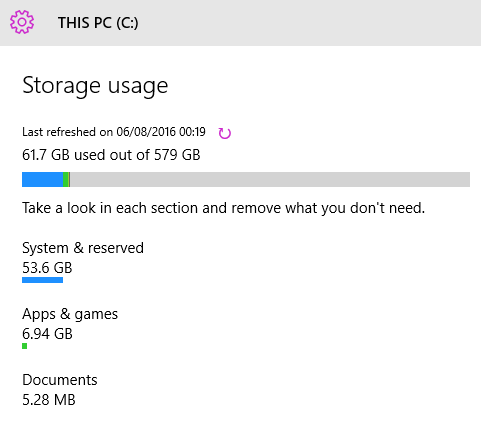
Windows 10 Storage Used

Moreover, removing them is time-consuming, and, only returns a fraction of space.

We’ve detailed how to remove the myriad Windows 10 bloatware apps


How to Easily Remove Bloatware From Windows 10


How to Easily Remove Bloatware From Windows 10

Windows 10 comes with its own set of pre-installed apps. Let's look at the methods you can use to remove the bloatware on your PC and debloat Windows 10.
Read More

, or you can learn how to purge your Start Menu of bloatware using one of Tina Sieber’s app suggestions


How to Easily Remove Bloatware From Windows 10


How to Easily Remove Bloatware From Windows 10

Windows 10 comes with its own set of pre-installed apps. Let's look at the methods you can use to remove the bloatware on your PC and debloat Windows 10.
Read More

 to do the work for you!

2. Reduce or Remove Hiberfil.sys

Windows 10 arrives on your system with hibernation turned on by default. It isn’t necessarily a bad thing, especially for those with masses of storage. Hiberfil.sys is the hibernation storage file that keeps track of your system vitals. The file stores key settings the operating system requires to restore from hibernation rapidly.

The size of your hiberfil.sys file relates directly to the amount of installed system RAM. It can occupy up to 75% of that amount, too. For instance, if you have 8GB RAM installed, the hiberfil.sys file could use up to 6GB of storage (hard drive storage, not your RAM). The more RAM you have, the more space the hiberfil.sys file will consume.

Want to turn it off?

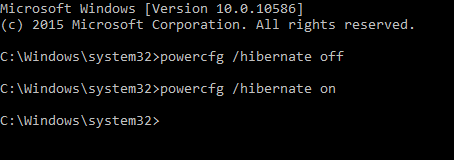
Windows Disk Cleanup Tool

  1. Type command prompt in your Start Menu search bar, right-click the Best Match and select Run as Administrator.

  2. Now, input powercfg /hibernate off. That’s it; hibernation is switched off.

  3. To turn it back on, input powercfg /hibernate on. Again, that’s it.

When you turn hibernation off, the hiberfil.sys file should immediately disappear, freeing up space.

3. Tweak Your Paging File Storage

Windows has an inbuilt feature called the Paging File. It works somewhat like a virtual memory relief


Is Your Virtual Memory Too Low? Here's How to Fix It!


Is Your Virtual Memory Too Low? Here's How to Fix It!

Computer memory issues can slow down your computer over time. Here's how to set the virtual memory size and boost performance.
Read More

.

Your system has a set amount of installed RAM. You cannot exceed the amount of RAM installed on your system. The installed amount is the limit. However, there are times when your system will butt up against the amount of RAM you have installed.

When that happens, Windows will attempt to use the paging file to offer temporary relief. Some of the important information currently held in the RAM will temporarily transfer to a file on your hard drive. As hard drive memory is much slower than super-fast RAM (even SSDs are slower), recalling this information takes longer. It also increases the wear and tear on your drive as your system performs more read/write operations.

You can control the size of the paging file or remove it completely.

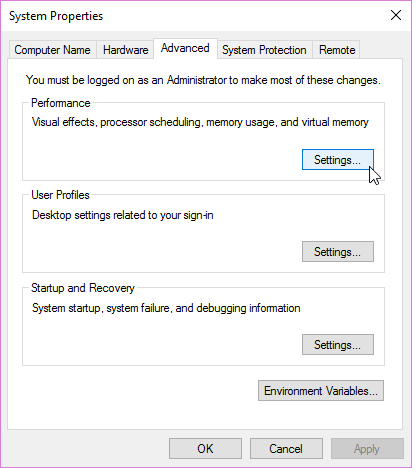
Head to Control Panel > System and Security > System. In the left-hand panel, select Advanced system settings. Select the Advanced tab. Under Performance, select Settings.

Windows Advanced System Properties

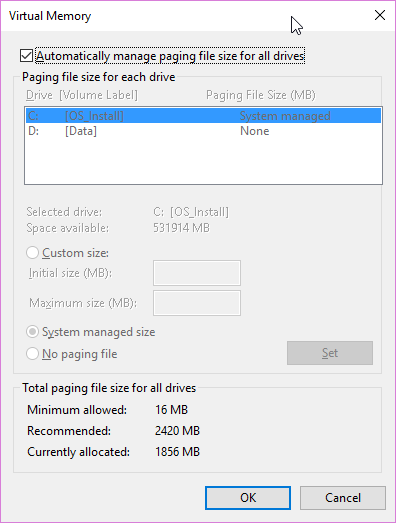
Head to the Advanced tab. You should now see a Virtual Memory panel. Select Change.

Windows Paging Files Options

You now have three options:

  • Custom size

  • System managed size

  • No paging file

You can eliminate the paging file, but I wouldn’t advise that. Even though the paging file exists, it isn’t necessarily taking up space, especially if you are not using all the RAM available to your system. If you want, reduce the size of the paging file.

4. Windows.old

When Microsoft releases a major update, Windows 10 creates a Windows.old folder. The Windows.old folder contains your old system settings, in case anything goes wrong with the new version. It is a handy system. But the Windows.old folder can sit on your hard drive for ten days, taking up valuable space, before it finally self-destructs. At one point, for various reasons, I ended up with three Windows.old files, taking up a huge amount of space.

You can delete the Windows.old folder manually. However, it comes with the warning that once it is gone, it isn’t coming back, as it is usually too large to send to the Recycle Bin. If you need to head back to the previous version of Windows 10 for any reason, within the ten days, do not delete Windows.old. It contains your system settings and old files, and deleting without a proper backup could lead you into all kinds of problems.

At the very least, you might cry and be angry at me, and I wouldn’t like that.

Free Up Disk Space

The best way to remove the Windows.old file is using the inbuilt Windows Disk Cleanup tool


How to Delete Old Windows Update Files


How to Delete Old Windows Update Files

There is still one part of Windows Update that needs your attention: the old files that are left behind. They can take up a lot of space.
Read More

.

windows 10 free up space

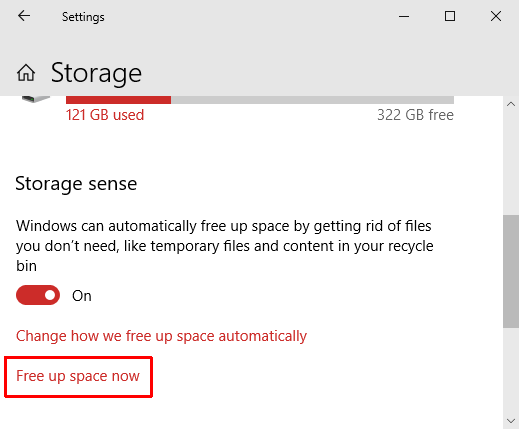
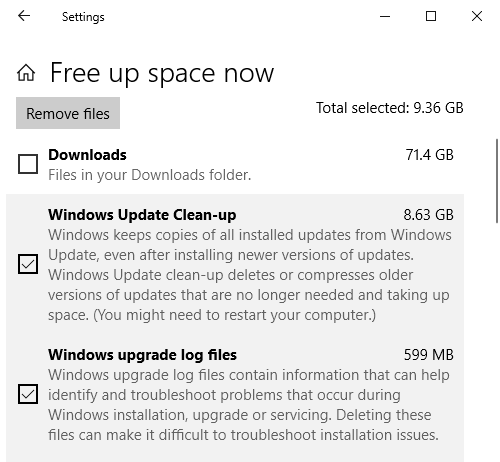
Type free up into your Start Menu search bar and select the Best Match. Under Storage sense, select Free up space now. Windows 10 will automatically calculate how many temporary files you can delete, including your Windows.old folder. Make sure to check the Windows Update Clean-up box. You can also delete the Windows upgrade log files, as they can take up additional space.

windows disk cleanup space

Decrease Windows 10 Space Further Using WinReducer EX-100

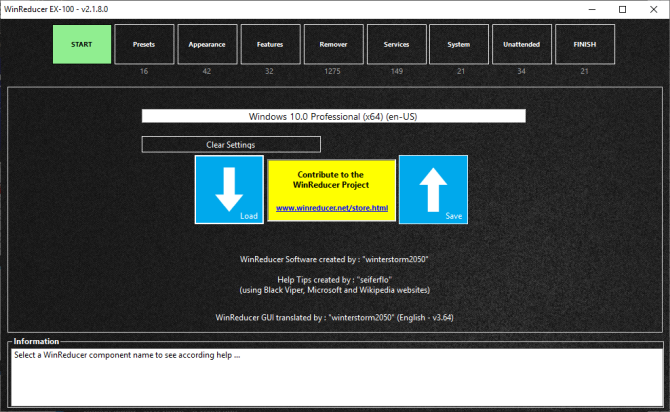
WinReducer EX-100 is a third-party tool you can use to decrease your Windows 10 installation size further. WinReducer is a well-known tool for Windows installation minimalists. It allows you to strip back the installation, removing services and utilities as you see fit.

winreducer windows 10 installation reducer

Just make sure you know what you’re removing. Some Windows services are dependent on others. You might find after installation that something you thought was innocuous is vital to a tool you want to run. WinReducer EX-100 does come with a heap of handy tooltips and an information panel to give you an overview. But if you’re unsure, search the web to figure out if removing a tool will break Windows 10 down the line.

I would advise Windows 10 installation reduction beginners to stick with the WinReducer presets, under the first tab.

Download WinReducer for Windows 10 32-bit | 64-bit (Both Free)

Windows 10 Cannot Get Any Smaller

As of the 1903 update, Windows 10 requires a flat 32GB of space. If your device has a 32GB hard drive, there is no way for you to create enough space for Windows 10 1903. Unfortunately, there is no indication that this size requirement will decrease in the future. Furthermore, even on a device with more storage, you can delete additional applications, destroy bloatware, keep your temporary files clean, and more, but you will still struggle to save more than 4GB.

Windows 10 is not getting any smaller. Although Microsoft does streamline during development, as the demands on the operating system grow, so does its size. For more on this topic, take a look at how to manage Reserved Storage on Windows


How to Manage Windows 10 Reserved Storage for Reliable Updates


How to Manage Windows 10 Reserved Storage for Reliable Updates

The Reserved Storage on Windows 10 is for seamless updates. Here's how to manage it and why you might want to turn it off.
Read More

.

Unsure which version of Windows 10 you need? Check out this overview of every Windows 10 version available to you


Every Single Windows 10 Version You Must Know About


Every Single Windows 10 Version You Must Know About

Windows 10 comes in over 10 different versions. We compare them all and explain what they're for and who their intended users are.
Read More

.


[ad_2]

Source link

Ads

Copyright © All Rights Reserved

Designed by: Templatezy / Dreamworkdesign™ / Sb Game Hacker